
Charged-Up Crossovers Compete: 2026 Cadillac VISTIQ vs 2026 Rivian R1S
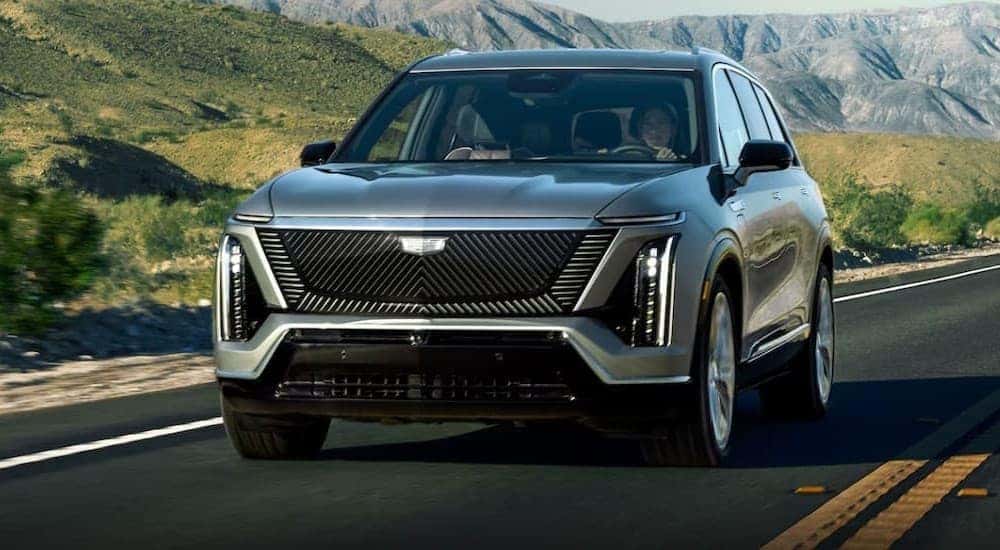
Cadillac is going all-in on the EV trend and transforming the American luxury market with the debut of the new VISTIQ crossover. The midsize SUV marks the latest addition to Cadillac’s all-electric lineup alongside the LYRIQ, OPTIQ, and Escalade IQ models.
While it might embrace an entirely new powertrain, it still delivers the high-end driving experience that’s long defined the Cadillac brand. The Rivian R1S might occupy the same three-row segment as the new VISTIQ, but the two SUVs embrace a very different automotive ethos. Today, we will be exploring how the 2026 Cadillac VISTIQ vs 2026 Rivian R1S stack up against each other. While the VISTIQ is focused on delivering a true luxury experience, the R1S takes a more performance-minded approach, prioritizing pure power and off-road ability.
Case in point: while the Cadillac telegraphs its high-end intentions with trim names like Luxury, Premium Luxury, and Platinum, the Rivian defines each model by its motor count, ranging from the Dual Standard to the Quad Launch Edition. So how do the two crossovers compare in terms of luxury features, advanced tech, and unique EV-exclusive features? Join us as we review both models and learn how Cadillac is upping the bar in the EV segment.
Luxury Comes Standard
The VISTIQ is tough to ignore if you’re in the market for a refined ride equipped with the latest comfort and convenience technology.
VISTIQ: Luxury at Every Level
The VISTIQ’s entry-level Luxury trim lives up to Cadillac’s reputation for sophisticated design with its sport suspension with continuous damper control, five-zone Intelligent ClimateSense control system, dual-pane panoramic sunroof, heated steering wheel, heated front and second-row seats, as well as a generous slate of advanced driver-assistance systems (ADAS), including Cadillac’s Super Cruise hands-free system.
The Premium Luxury ups the ante with faster 19.2-kW charging, second-row captain’s chairs, a rear-wheel steering system that improves both maneuverability and handling, exclusive Phantom Blue Nouveauluxe seats with custom quilting, and premium synthetic leather upholstery paired with a synthetic suede headliner. The range-topping Platinum keeps the Cadillac’s impressive power in check with a set of Brembo brakes and ups the SUV’s curb appeal with a distinctive, sleek black roof.
R1S: Luxury Features and Available Packages
Rivian’s midsize EV offers a more à-la-carte system of available upgrades. While climbing the R1S trim ladder allows owners to access more power and range, premium features don’t exactly come standard.
Instead, Rivian expects buyers to invest in optional add-ons and pricey additional packages if they want to enjoy larger batteries, premium audio systems, and all-terrain gear. This would be an acceptable trade-off if the Rivian rang in significantly lower than its Cadillac competitor, but that’s just not the case with the R1S coming in slightly below with a starting MSRP of $76,990compared to the MSRP of $77,395 for the VISTIQ.[a]
Halfway through the Rivian trim lineup, pricing already exceeds the price of the most premium VISTIQ trim, especially when you get into the tri- and quad-motor models. The R1S Tri model is the rare exception, with its sporty styling upgrades, standard Sound + Vision package, and advanced driving modes; if anything, it highlights the value-oriented trade-offs in the remaining trims.
A Fully Digital Domain
A generous suite of comfort and convenience features has always been a major selling point in the luxury segment, but modern vehicles are increasingly defined by their digital appeal. It might be the newest addition to the segment, but the 2026 Cadillac VISTIQ already represents one of the most technologically advanced options on the market with a well-rounded arsenal of advanced tech that Rivian’s own midsize model struggles to match.
VISTIQ: Innovative In-Cabin Tech and Safety Systems
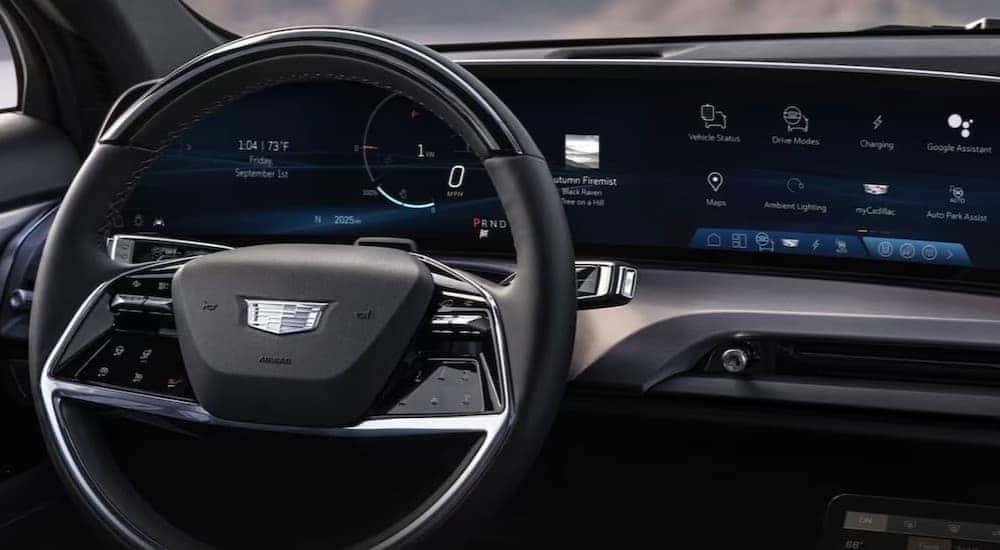
It all starts on the dashboard, where Cadillac drivers will enjoy an expansive 33-inch curved display that combines the EV’s infotainment display and digital instrument cluster into one handy screen. Powered by Google built-in technology, the infotainment system is a cutting-edge command center that can be used to adjust various settings, employ your favorite apps, or cue up a playlist to enjoy on the standard 23-speaker AKG audio system.
Dual wireless phone chargers and a Wi-Fi hotspot keep everyone juiced up and connected, while an active noise cancellation system turns the cabin into a quiet oasis of calm on even the busiest roads.
The VISTIQ also offers a comprehensive lineup of ADAS tech, including Cadillac’s critically acclaimed Super Cruise hands-free driving tech, but its unique features, such as the SUV’s safety alert seats, traffic sign reader, and rear-seat passenger reminder, really showcase Cadillac’s safety-first approach to the segment.
The Premium Luxury trims up the ante with innovative features that are sure to instill drivers with plenty of confidence every time they step behind the wheel. A head-up display with augmented reality overlays projects full-color graphics directly onto the windshield, which can make all the difference when it comes to following turn-by-turn GPS directions or tracking the status of various ADAS. The VISTIQ also addresses nocturnal safety with a night vision feature that uses infrared cameras to alert drivers to any obstacles that might be lurking on a murky stretch of the road.
R1S: Infotainment, Connectivity, and Driver Assistance
The R1S’s lack of luxury credentials comes into sharp focus when you start to size up its technological resume. A 15.6-inch infotainment display and a 12.3-inch digital instrument cluster keep the SUV’s screen cover below 30 inches, and the standard stereo system features almost half the speakers found in the VISTIQ, totaling 12.
Two 120-volt outlets, eight USB ports, a wireless charger for up to two phones, and a flashlight in the door help the Rivian to make up some ground. Still, other upgrades are only accessible by adding optional equipment packages that can substantially inflate the bottom line.
Rivian has been without a true hands-free system for much of its history, but joined the party in late 2025 for eligible first-gen models. The 2026 R1S is packed with the Rivian Autonomy Platform+. While it offers impressive coverage and can operate on any clearly marked road, it doesn’t have the reliable, proven track record of Super Cruise.
Rivian’s startup status might be a major selling point for some. Still, when it comes to developing a robust hands-free system, there’s something to be said for the resources and institutional knowledge of a well-established name like Cadillac.
Electrifying Vehicle-To-Home Capability
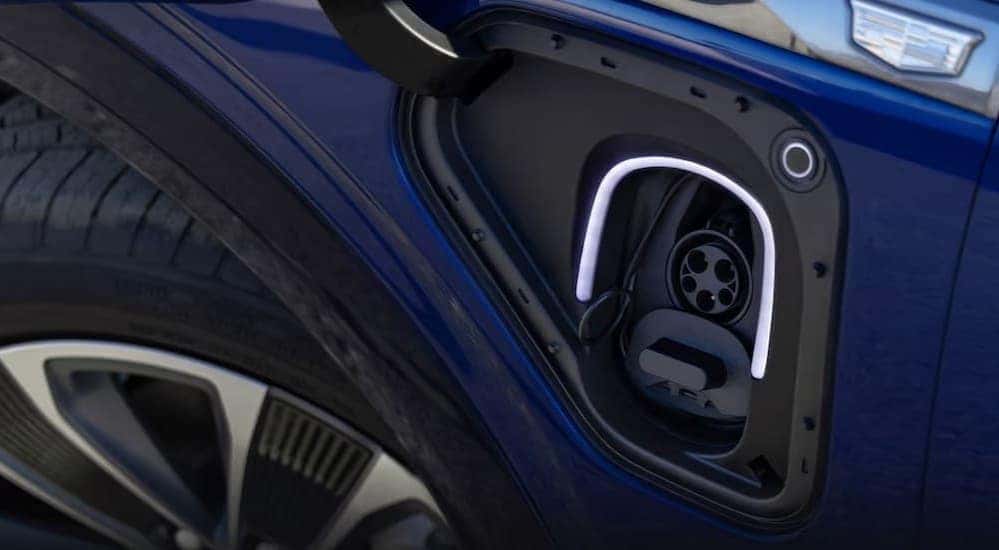
The Cadillac VISTIQ isn’t just one of the most luxurious options in the midsize segment; it also doubles as a convenient power source thanks to Cadillac’s Vehicle-To-Home (V2H) bidirectional charging technology.
VISTIQ: V2H Technology and Smart Energy Use
Whether you need to power your home during an unexpected blackout, run lights, speakers, or a refrigerator for an outdoor event, or operate power tools when you’re miles away from the closest outlet, Cadillac’s V2H system is here to help.
While most EVs have a one-way relationship with the wall socket, the brand’s innovative V2H tech allows owners to reverse the flow, tapping into VISTIQ’s battery to export its considerable power. Want to lower your monthly electric bill? Simply activate the Cadillac’s V2H technology during peak hours, and you’ll be able to avoid paying the higher rate.
Cadillac is even working on a vehicle-to-grid function that would allow drivers to sell their excess power back to their local utility, potentially. While there haven’t been any official announcements, sources indicate the technology could debut by late 2026. To enjoy VISTIQ’s V2H feature, drivers will need to purchase the GM Energy PowerShift Charger and the GM Energy V2H Enablement Kit, but it’s a small price to pay for the energy independence the system can provide.
R1S: Current V2H Status and Future Prospects
Rivian is a bit behind the curve when it comes to its own V2H system. Many of the market’s larger EV offer some form of V2H tech, but the startup is saving that particular trick for its next-generation R2 SUV.
A new energy management control module will allow the R2 to perform the V2H trick, and while it’ll certainly boost Rivian’s appeal in the all-electric segment, there’s one frustrating fact that’s difficult to ignore.
The current R1S model isn’t hurting for power with standard 92.5 kWh battery packs, but the lack of a current bidirectional charger and the associated software means that drivers can’t access the crossover’s considerable power. It’s easy to see the importance of prioritizing consistent production over such auxiliary features when launching a new auto brand, but Rivian’s decision to limit the R1S’s V2H capability still feels a little underwhelming.
A Proven Track Record
While we’ve covered some of the most important differences between the Cadillac and Rivian’s all-electric SUVs, the most important distinctions between the VISTIQ and R1S are reflected in each brand’s history.
Cadillac has long been considered the first name in American luxury and boasts roots that reach back more than 100 years. The iconic automaker has developed a hard-earned reputation for both quality and performance, and its vehicles have become nothing less than four-wheeled status symbols in the process.
The Detroit automaker might have emerged in an era of hand-cranked starts and wire-spoked wheels, but a commitment to continual improvement, has seen the brand eagerly embrace a new generation of all-electric models, like the new VISTIQ EV. Rivian bears all the hallmarks of a spunky startup, and while the innovation-driven Silicon Valley spirit might work for developing new apps and gadgets, the brand’s newcomer status makes it a bit of a gamble compared to Cadillac’s long history.
The upcoming R2 looks to improve on many of the R1S’ shortcomings, but the new 2026 Cadillac VISTIQ still looks like the smart buy in today’s midsize luxury EV segment.