
Sporty SUV Showdown: 2026 Cadillac LYRIQ vs 2026 Mercedes-Benz EQE SUV
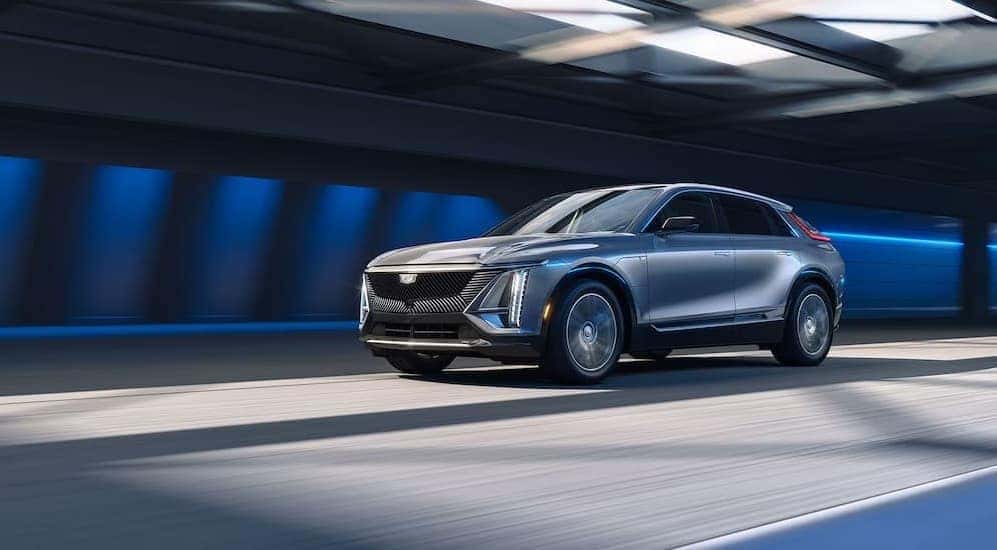
The LYRIQ was already one of the industry’s best midsize luxury EVs, and it’s only gotten better for the 2026 model. The crossover is a standout from a performance perspective, and drivers can now enjoy almost 20% more power thanks to the arrival of a new V-Series trim.
Said to be the quickest Cadillac in the brand’s hundred-plus years on the market, the LYRIQ-V sees the luxurious SUV gain a little street-racing flair with a 3.3-second zero to 60 mph time and an integrated launch control feature. The new high-performance LYRIQ has hogged the headlines, and for good reason, but it’s another upgrade that really cements the SUV’s segment-leading status.
Cadillac’s groundbreaking Super Cruise hands-free driving tech has been one of the LYRIQ’s major selling points ever since the crossover was unveiled back in 2023, and it is now standard across the entire trim ladder, with Cadillac treating drivers to a complimentary three-year subscription. It’s a generous approach to a feature often treated as optional, and the timing couldn’t be better, with Super Cruise having recently landed MotorTrend’s inaugural Best Tech Award as the industry’s best driver assistance program.
The 2026 LYRIQ does face some stiff competition on the luxury end of the crossover spectrum, but how does it fare against one of its key European rivals? Join us as we compare the 2026 Cadillac LYRIQ vs 2026 Mercedes-Benz EQE SUV and learn which midsize crossover deserves to take the EV crown.
Powerful Potential
The Cadillac LYRIQ and Mercedes-Benz EQE SUV might share a midsize classification and a luxury focus, but the EVs take two very different approaches when it comes to performance. Cadillac has put the emphasis on speed, equipping the LYRIQ with a potent all-electric powertrain that allows the SUV to deliver an engaging experience that you won’t soon forget. Every version of Cadillac’s compelling EV is equipped with a 102 kWh battery pack, but it’s the electric motors that really make all the difference.
The entry-level trim comes with a single-motor rear-wheel drive setup that allows the LYRIQ to produce 365 hp and sprint from zero to 60 mph in 5.7 seconds. Adding a second motor to the front wheels gives the LYRIQ all-wheel drive and boosts output to 515 hp, which is good enough for a zero to 60 mph time of 4.6 seconds. That’s sure to inject a little excitement into your next drive, but if you want to really pull some serious Gs, look no further than the high-performance V-Series trim.
The LYRIQ’s ultimate guise is powered by the same setup as the all-wheel drive model, but can produce 615 hp and 650 lb-ft of torque and get up to speed in just 3.3 seconds. Cadillac has also outfitted the V-Series models with all of the high-end gear drivers will need to take full advantage of that power, including a lowered suspension, a retuned steering rack, adaptive dampers, Brembo brakes, and more.
While the EQE SUV boasts the same potential, Mercedes-Benz has chosen a more restrained approach that sees its EV lag behind in a few key areas despite being equipped with a comparable selection of batteries and electric motors. The SUV’s base model seems promising with the ability to produce 315 hp, and even though it comes close to the rear-wheel drive LYRIQ with a 5.9-second zero-to-60-mph time, a relatively undersized 96 kWh battery prevents the EQE from reaching the same heights as the Cadillac crossover.
The situation doesn’t improve as you climb the trim ladder, with the all-wheel drive EQE 350 4MATIC model employing an even smaller 90.5 kWh pack. A dual-motor design does allow the EQE to considerably increase its torque to 564 lb-ft, but the actual horsepower remains unchanged at 315 hp, and the model is far slower with a zero-to-60-mph time of 6.2 seconds.
If you want a midsize EV that can compete with the LYRIQ-V, you’ll have to invest in the pricey AMG EQE. But buyer beware: while it does top the Cadillac by two ponies with 617 hp to its name and can hit 60 mph in 3.4 seconds, you’ll pay for that sort of performance, with the AMG ringing in at almost six figures.
Range to Roam
Performance is an important factor when shopping for any vehicle, but its practicality that tends to drive the decision-making process for many drivers. While today’s EVs do put a premium on performance, they’re also inherently limited by their range. You never really need to concern yourself about refueling when you’re behind the wheel of a gas-powered vehicle, but EVs introduce some crucial, charging-related considerations into the mix.
When it comes to range, the Cadillac LYRIQ has a major advantage in the form of the brand’s Ultium EV battery. The innovative technology actually made its debut on the original LYRIQ back in 2023, and has quickly become the bar against which all EV batteries are judged thanks to its high energy density, low cost, and rapid charging ability.
The 2026 LYRIQ is powered by a 102 kWh Ultium battery pack that gives the base model 326 miles of all-electric range. That’s higher than the current industry average and should ensure plenty of flexibility in terms of your charging schedule. Adding all-wheel drive to the equation sees the LYRIQ lose just seven miles of range, which is a worthwhile sacrifice when you consider the sort of performance the dual-motor design can provide.
As expected, the new high-performance LYRIQ-V brings up the rear with 285 miles of driving range, but once again, it’s a small price to pay when you’re talking about a family-friendly SUV that can sprint from zero to 60 mph in just 3.3 seconds.
So how does the EQE SUV’s range measure up against the Cadillac LYRIQ? The Mercedes-Benz’s smaller lithium-ion battery isn’t doing it any favors, especially when compared to the LYRIQ Ultium pack. The base EQE 320+ trim manages to squeeze 302 miles out of the 96 kWh battery, which is shockingly average for a luxury model.
The all-wheel drive version of the EQE SUV fares even worse, sacrificing almost 50 miles for a total range of 253 miles due to its smaller 90.5 kWh battery and second electric motor. Then there’s the acronym-heavy AMG EQE SUV. We’re not arguing with the sort of fun that a 617 hp crossover can provide, but the EV’s appeal is severely limited by the fact that you’ll have to keep a close eye on the battery to ensure you don’t exceed the model’s underwhelming 230-mile range.
Hands-Free Cruising
The 2026 Cadillac LYRIQ offers the sort of performance that’ll have you looking forward to every ride, but what about those times when you want to take a more hands-off approach? A new era of automated driving technology is quickly changing the way we experience life behind the wheel, thanks to new hands-free systems that allow drivers to sit back, relax, and let their vehicle handle some of the more mundane aspects of their daily commute or extended road trip.
Of course, not all vehicles are created equal when it comes to their hands-free tech. While some brands are rapidly deploying new hands-free systems, others are taking a more conservative approach or limiting their own automated system to higher trims and specific models.
Cadillac and Mercedes-Benz occupy opposite ends of the hands-free spectrum, at least when it comes to the LYRIQ and EQE SUV. Cadillac’s Super Cruise hands-free driving tech consistently ranks as one of the industry’s best offerings with the recent MotorTrend award and a stellar 75/100 score from Consumer Reports. Super Cruise can be used on over a million miles of highways across the US and Canada, which is nearly 10 times the coverage of its closest competitor.
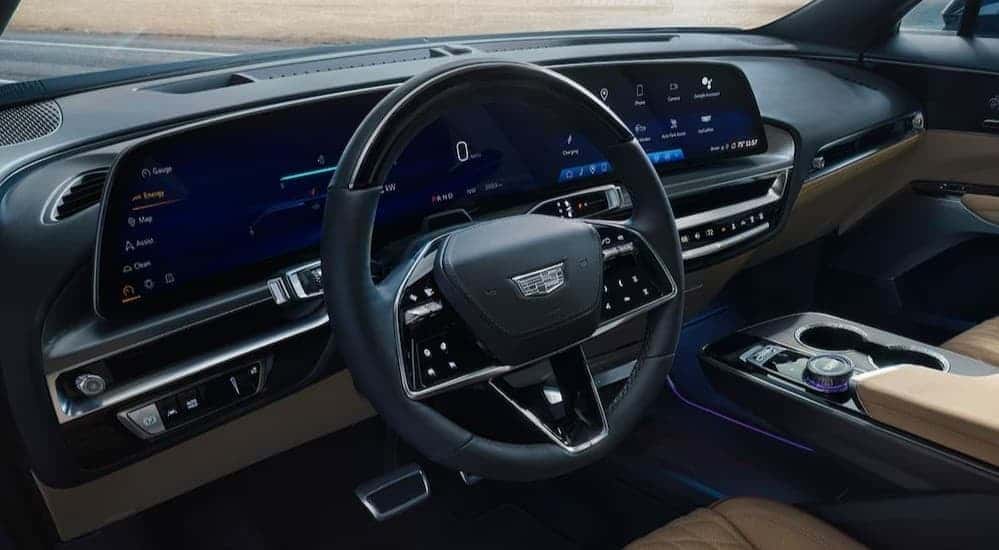
Best of all, Super Cruise is now standard on every LYRIQ trim, with Cadillac dramatically expanding the system’s availability for the 2026 model year. The system uses a network of cameras, radars, and LiDAR map data to provide full hands-free functionality at speeds of up to 85 mph. Super Cruise also includes a sophisticated driver monitoring feature that ensures the operator is always attentive and ready to take over at a moment’s notice, which is an important safety net in any hands-free system.
Like the LYRIQ, the EQE SUV packs a full slate of standard advanced driver-assistance systems (ADAS), and all of the premium add-ons buyers would expect for the segment. While features like lane keeping assistance, adaptive cruise control, automated lane change assistance, and an automated parking system allow the EQE to mimic some of the functionality of Super Cruise, the crossover lacks the full hands-free capability of its Cadillac competitor.
The LYRIQ Leads the Way
The 2026 Cadillac LYRIQ serves to showcase Cadillac’s cutting-edge approach to the luxury segment. From an advanced 102 kWh Ultium battery that gives the midsize SUV some of the best performance and range in its class to the award-winning Super Cruise hands-free driving tech, the LYRIQ leverages the latest technology to give drivers an elevated EV experience. Most importantly, drivers don’t have to spring for the new V-Series trim in order to tap the SUV’s full performance potential, with even the standard all-wheel drive model offering more than 500 hp.
The EQE SUV trades on Mercedes-Benz’s reputation in the luxury segment, but seems to take its foot off the gas in some key areas. Given the brand’s legacy for high-performance designs, it’s difficult to understand why Mercedes-Benz would leave so much on the table when it comes to the EQE SUV.
The discrepancy between the two EVs could be attributed to each model’s intended audience, but if Mercedes-Benz thinks that luxury buyers are willing to accept sub-par performance, mediocre range, and a half-hearted response to hands-free driving, it hasn’t been paying attention. The AMG model might help the EQE make up some ground, but it’s difficult to ignore the fact that the LYRIQ-V offers similar performance-centric hardware with much more usable range.
Are you ready to experience Cadillac’s refined yet thrilling take on the midsize crossover EV? The LYRIQ is waiting for you here at Jim Ellis Cadillac.