
2025 Cadillac Escalade IQ vs Mercedes-Benz EQS SUV: Which Luxury SUV Is Best?
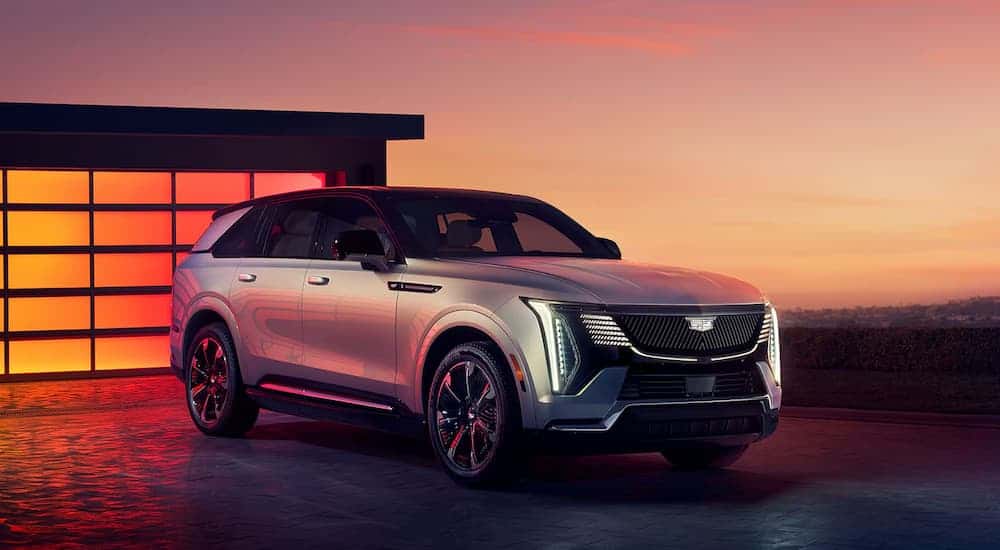
The Cadillac Escalade IQ seems destined for success, and it’s easy to see why. The full-size SUV sees Cadillac convert one of its most popular models into an all-electric vehicle, allowing drivers to embrace the future while still enjoying the performance, size, and luxury features that have long made the Escalade a leader in the segment. That’s not to say Cadillac is late to the all-electric game: the brand was a leader in the segment with the LYRIQ EV back in 2022 and has recently added the compact OPTIQ to the lineup. This push toward an electrified future continues into 2026, with Cadillac debuting the VISTIQ three-row SUV, LYRIQ-V high-performance model, and an elongated version of the IQ dubbed the IQL.
New for 2025, the IQ proves that Cadillac is still well ahead of the curve when it comes to EV innovation, with over 450 miles of range, ultra-fast charging, and a long list of standard and available features that give drivers the opportunity to create their own one-of-a-kind ride. So what other surprises does the new SUV have in store, how does it stack up against one of its leading competitors in the Mercedes-Benz EQS, and why should you consider a Cadillac Escalade IQ for sale? We’ll answer all that and more as we get behind the wheel of Cadillac’s new full-size EV…
Performance
The Escalade IQ isn’t just one of the largest full-size models on today’s market; it’s also one of the most powerful. Cadillac has pulled out all the stops when it comes to crafting the IQ’s powertrain, outfitting the SUV with a 205-kWh battery that allows it to achieve 680 hp with ease. That’s more than enough muscle to put the rest of the luxury segment on notice, but the Escalade IQ is just getting started. Cadillac has outfitted every 2025 IQ with a unique Velocity Max drive mode that gives the SUV the ability to churn out 750 hp and 785 lb-ft of torque.
These sorts of power-boosting drive modes are becoming increasingly common in the performance EV segment, but the IQ outshines the competition with the Velocity Max mode’s indefinite duration. Other EVs can provide a brief burst of energy to help accelerate off the line or temporarily max out the horsepower, but the IQ will keep operating at 750 hp right up until the battery runs out. The full-size Cadillac Escalade IQ also offers 8,000 lbs of towing capacity, which dramatically improves its utility and lets it haul even the weightiest cargo without batting an eye.
While the Mercedes-Benz EQS might be able to keep pace with the Cadillac Escalade IQ in terms of luxury, performance is a different story altogether. The EQS gives drivers plenty of options to choose from, with three powertrains on the table for 2025, but none can match the pure brawn of the Escalade IQ’s 750-hp offering. The EQS starts with a single 335-hp electric motor in the entry-level 450+ trim, which is a little underwhelming for a three-row model and struggles to get up to speed with a zero-to-60-mph time of 6.2 seconds.
The EQS 450 4Matic ups the ante with a dual-motor design that produces 355 hp while adding AWD to the mix, but it’s still a far cry from the Escalade IQ. The range-topping EQS 580 4Matic is the best of the bunch, though it tops out at just 536 hp and 633 lb-ft of torque. You can’t be too hard on the EQS when it comes to its sub-par performance; after all, it is basically just a lifted version of the brand’s sedan of the same name. Converting a car into an SUV is always going to result in a few shortcomings, and sadly, the EQS is no exception. That said, both the IQ and EQS come standard with a host of comfort-enhancing tech, including an adjustable air suspension that enables the SUV to improve its ground clearance by up to 2.5 inches when the going gets rough.
Winner: Escalade IQ
Range
From horsepower and towing ability to safety features and interior tech, there are plenty of factors to consider when choosing your next vehicle. EVs add two important new metrics into the mix in the form of driving range and charging time. Today’s all-electric vehicles have come a long way from some of the industry’s earliest models and now average nearly 300 miles of range on a single charge, but it really all depends on which model you choose. The Cadillac Escalade IQ is a true standout in its class with the SUV’s huge 205-kWh battery, giving it an estimated range of up to 460 miles in AWD.
That number allows the Escalade IQ to top much of the EV segment, besting not only the Mercedes-Benz EQS but also leaving the Lucid Gravity (450 miles), Rivian R1S (410 miles), and Polestar 3 (350 miles) choking on its dust according to recent data from Green Car Reports. Most importantly, the Escalade IQ’s ample range serves as an important buffer against any unexpected detours, traffic jams, or other driving scenarios that might leave you with a depleted battery when you’re miles away from the nearest charging station.
The Mercedes-Benz EQS puts up a good fight, but it is ultimately hampered by a relatively small 118-kWh battery pack. The 450+ trim delivers an EPA-estimated 323 miles that, while still above the industry average, is a far cry from the Escalade IQ’s 460 miles. The issue is only exacerbated by the SUV’s AWD powertrains, with the EQS 450 4Matic returning 312 miles and the EQS 580 4Matic maxing out at 317 miles. These numbers aren’t just a little low for the premium end of the SUV market; they’re actually on the downslide, with the 2025 EQS’s estimated range falling short of its 2024 iteration, which returned between 339 and 330 miles of all-electric range, suggesting that Mercedes-Benz is trending in the wrong direction.
Winner: Escalade IQ
Charging
So, how do the Cadillac Escalade IQ and Mercedes-Benz EQS compare in terms of charging? Again, the IQ boasts a clear advantage that leaves the EQS looking a little impractical in comparison. Cadillac designed the Escalade IQ with an 800-watt architecture that comes in handy when it comes time to pull up to your nearest charging station. When hooked up to the average Level 2 connection, the Escalade IQ’s 19.2-kW onboard charger lets it add 37 miles of range per hour. That translates to nearly 300 miles per night, which gives drivers plenty of range to work with as they go about their daily commute. The Mercedes-Benz EQS isn’t too far behind with the ability to add 20 to 30 miles of range per hour of Level 2 charging, but its small 9.6-kW onboard charger leads to a bit of a bottleneck when it comes time to top off the battery.
The difference between the two SUVs is even more pronounced when you enter the realm of DC Fast Charging. Public fast-charging stations are the quickest, most efficient way to add some extra range, but the EQS can’t take full advantage due to its 200-kW fast-charging rate. While the exact figure varies depending on the trim, drivers can expect to add around 90 miles of range per ten minutes of fast charging. The Escalade IQ was designed with speed in mind, both in terms of acceleration and charging time, with Cadillac equipping the EV with a 350-kW fast-charging rate that sees the SUV add nearly 120 miles for every ten minutes of charging. If you’re looking to spend more time enjoying your ride and less time monitoring your battery meter in a parking lot, the Cadillac Escalade IQ is the obvious choice.
Winner: Escalade IQ
Hands-Free Driving
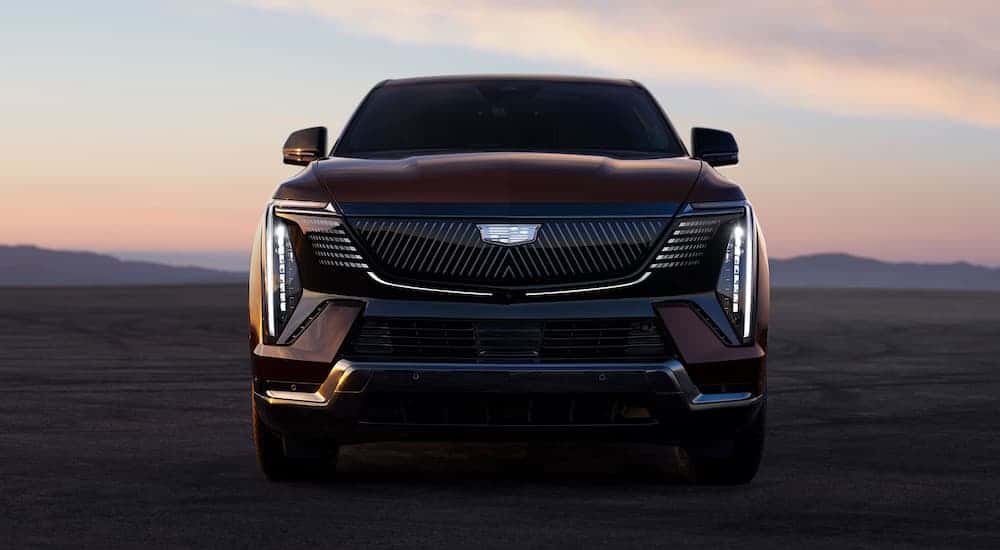
The Cadillac Escalade IQ has only been on the market since 2024, but it’s already being treated to a major upgrade in the form of GM’s Super Cruise hands-free driving tool. This dependable hands-free system comes standard on all 2025 Escalade IQ trims, allowing drivers to experience the road in an entirely new way while significantly upping the SUV’s appeal from a safety and convenience perspective. Super Cruise uses a network of cameras, LiDAR, sensors, maps, and GPS data to handle a wide range of driving duties. From braking and accelerating to changing lanes and navigating dense traffic, Super Cruise provides a worry-free driving experience that’ll have you looking forward to your next extended road trip.
The system is compatible with hundreds of thousands of miles of pre-mapped roads, and the coverage is only improving with every passing year. While Super Cruise was available on around 400,000 miles of mapped roads across the US and Canada in 2022, that number is expected to grow to some 750,000 miles by the end of 2025. Super Cruise also happens to be one of the industry’s best-reviewed hands-free driving systems, earning a stellar 75/100 score from Consumer Reports that sees it rank second among all entrants. Consumer Reports also praised its capabilities, performance, clarity, and driver engagement, placing it well above competing tools from the likes of BMW, Lexus, Infiniti, Tesla, and Volvo.
Mercedes-Benz’s own Level 2 hands-free driving tool placed just behind Super Cruise with a 72/100, but the 2025 EQS features an entirely new offering in the form of Drive Pilot. The new tech is the first Level 3 hands-free driving system on the market and offers some real advantages over Mercedes-Benz’s previous offering. As with Super Cruise, drivers can fully remove their hands from the wheel, but Drive Pilot requires even less engagement. Drivers can take their eyes off the road when certain conditions are met, and the system can automatically change lanes, navigate traffic, and even pull over when it detects an emergency response vehicle.
There are only two problems with Mercedes-Benz’s advanced hands-free tech. First: it’s limited to just 40 mph, though the company was recently granted permission to up that number to 59 mph on German motorways. Second, and most importantly, it’s not actually legal in most states. California and Nevada are the only two states that currently allow vehicles to operate under Level 3 hands-free control, which means Georgia drivers will be limited to the brand’s Level 2 system. Drive Pilot could represent an alluring look at the future of hands-free driving, but it’s hard to say when state and federal regulations will catch up with the technology.
Winner: Escalade IQ
Technology
The Escalade IQ’s Super Cruise is just one part of its comprehensive suite of advanced technology. The EV’s dashboard is dominated by a 55-inch display that stretches across the entire dashboard to offer one of the industry’s most accessible interfaces. From monitoring relevant data to accessing the GPS, placing calls, or interacting with your favorite apps, the IQ’s Google Built-In makes for a seamless digital experience every time you step behind the wheel. Cadillac has also shown some important restraint in deploying the IQ’s digital arsenal, reserving certain functions for a second, smaller (11-inch) touchscreen in order to avoid the clutter and menu-diving that can come with an all-in-one display. The smaller screen can be used to adjust the cabin’s ambient lighting and manipulate the Escalade IQ’s generous five-zone climate control system.
Other tech-related goodies include a 5G Wi-Fi hotspot, a 21-, 39-, or 42-speaker AKG sound system, and a bidirectional charging feature that allows the Escalade IQ to power an entire home for up to three days, but the available Executive Second Row Package might be the SUV’s most enticing add-on. Designed for businesspeople who can’t afford to miss that important conference call or shareholder’s meeting, the Executive Second Row Package turns the IQ into a mobile workstation complete with two 12.6-inch screens, wireless charging pads, fold-down tables, and second-row seats with heating, ventilating, and massaging capabilities.
Once again, the Mercedes-Benz ESQ fails to meet the standard set by the Cadillac Escalade IQ. The SUV’s 56-inch Hyperscreen display might offer a little extra real estate, but it would have to be, as it’s saddled with controlling almost every aspect of the vehicle’s operation and infotainment responsibilities. The Hyperscreen also tends to operate in distinct clusters with different sections reserved for infotainment, gauges, and other functions, which makes the 56-inch measurement seem a little misleading. Sure, the glass might technically stretch from pillar to pillar, but it seems like a bit of a gimmick when compared to the IQ’s panoramic display.
Mercedes-Benz’s three-row SUV does include Apple CarPlay and Android Auto, a wireless charging pad, a premium Burmester audio system, and ambient lighting, but it lacks next-level options like the Escalade IQ’s Executive Second Row Package. It’s also devoid of Cadillac’s bidirectional charging capability, at least in America. Once again, international drivers get all the fun with the ESQ’s bidirectional capability, currently limited to the Japanese market.
Winner: Escalade IQ
Conclusion
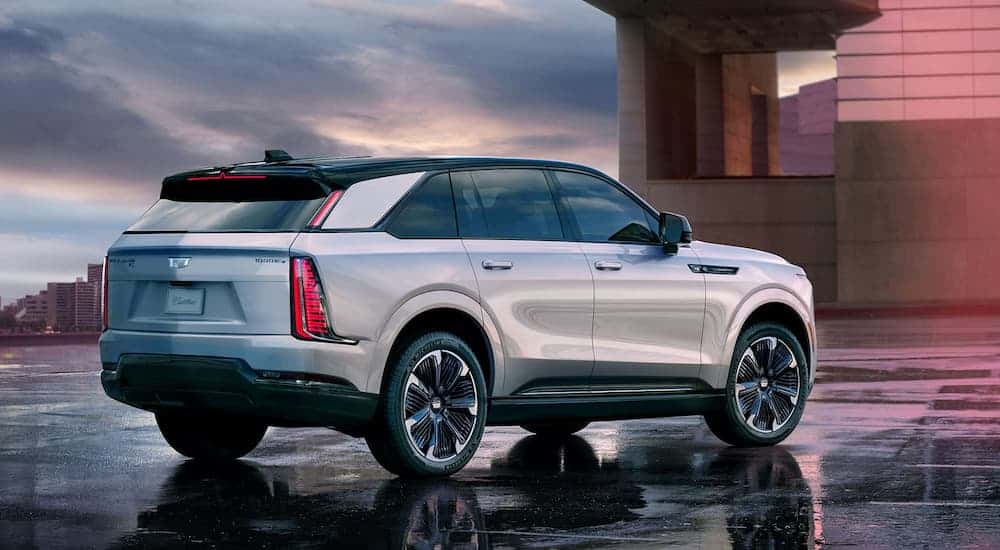
The Escalade IQ might boast some obvious advantages over the Mercedes-Benz ESQ in terms of performance, range, charging, and tech, but that hardly scratches the surface when it comes to the differences between the two luxury EVs. Take cargo and passenger space, for one. When you start to drill down into the numbers, the EQS hardly seems like it belongs in the same class as the IQ. Mercedes-Benz’s EV hardly earns the designation with a five-person capacity and just 59 cu.ft. of passenger volume. While drivers can up the EQS’s seating to accommodate seven passengers, every Escalade IQ offers seven seats and an extra 15 cu.ft. of passenger volume to boot. The difference is even starker when it comes to cargo capacity.
The Escalade IQ is one of the roomiest models on the market, with 119.1 cu.ft. of cargo space and an extra 12.2 cu.ft. in the front trunk. The EQS simply can’t compete at 74 cu.ft. and doesn’t even feature a frunk to help close the gap. Both models trade on their luxury credentials, and neither SUV is short on premium materials, comfort and convenience features, or cutting-edge tech, but with all that being equal, the IQ simply sets too high of a bar from a performance and capacity perspective. The 2025 Cadillac Escalade IQ encompasses everything there is to love about the luxury segment, but you don’t have to take our word for it; come by Jim Ellis Cadillac today and experience Cadillac’s new full-size EV for yourself.