
Your Guide to GM’s Super Cruise Technology
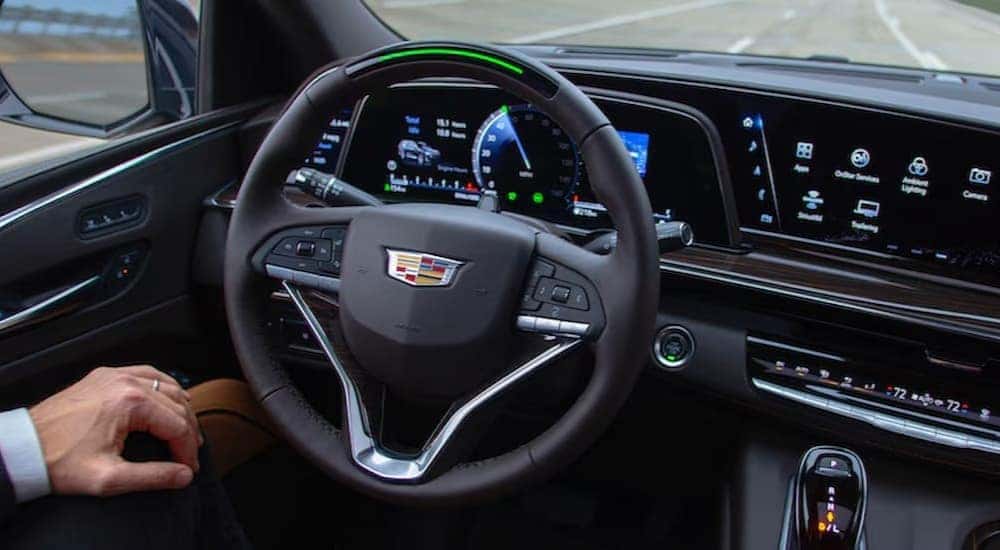
New technology can be incredibly exciting but also a little unnerving; the unknown is often a bit intimidating and frequently feels equal parts exhilarating and nerve-wracking. This is even truer when we are talking about technology that changes the way we drive and requires a lot of trust in the systems that we now find on the road. One of the most exciting pieces of technology you can find here at your favorite Cadillac dealer near Norcross is GM’s innovative and industry-leading Super Cruise semi-autonomous hands-free driving system. This is an incredible piece of technology that, just like it sounds, lets you drive with your hands safely off the wheel (though your focus needs to remain on the road) on more than 400,000 miles of compatible roads across the US and Canada. Recently, GM announced that the number of compatible road miles is expanding to over 750,000 in North America by the end of next year, so let’s take a closer look at this tech and everything you should know about it.
Basics of GM’s Super Cruise Tech
As we said, Super Cruise lets you safely drive on highways with your hands off the wheel. This is accomplished thanks to an advanced system that combines several different safety technologies into a comprehensive package designed to handle a lot of safe driving routines for you. For starters, it utilizes an Adaptive Cruise Control system similar to what you can find in many other vehicles, which lets you drive at a set speed like standard cruise control but also adjusts your speed to maintain a safe distance between your vehicle and the one ahead of you. This can even adjust for stop-and-go traffic, coming to a complete stop when necessary and speeding up to go with the flow of traffic.
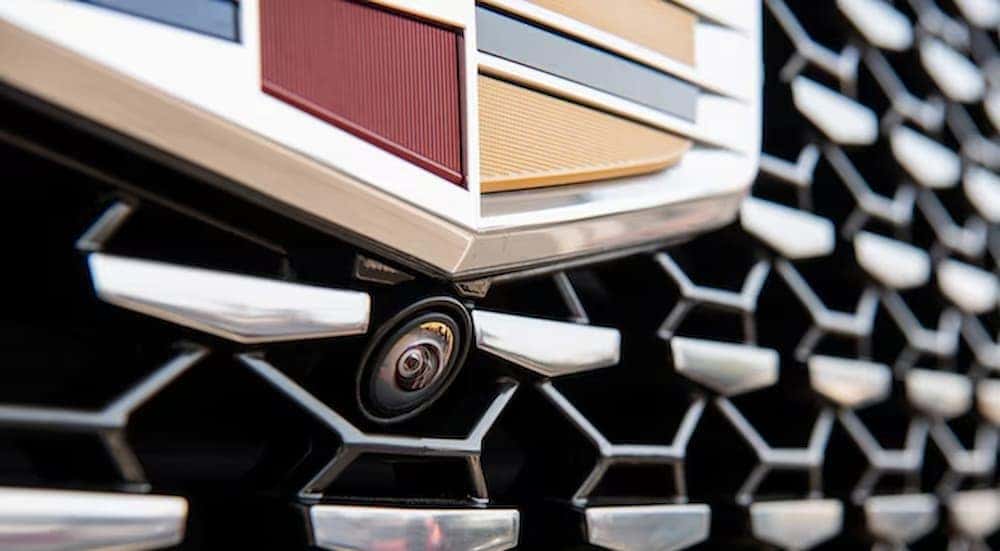
Every vehicle with Super Cruise also has GM’s Lane-Centering technology that can automatically adjust the position of your vehicle to stay centered in your lane rather than drifting from side to side. When these systems, among others, are utilized through a complex system of cameras and laser radar (or LiDAR) technology, they can keep track of the environment around you and drive safely through it. This does require that GM maps highways using precise LiDAR techniques that help ensure your vehicle has a clear image of what the road in an area looks like—this is part of why its use is limited to certain areas.
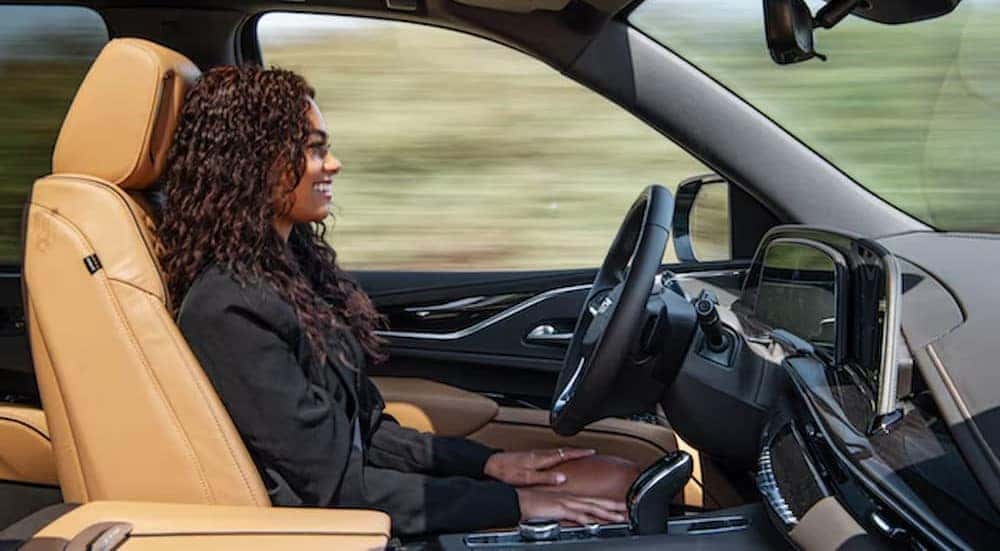
If you have a vehicle with Super Cruise, and you are on a road that supports its use, then an indicator lights up. All you do at that point is activate the Super Cruise system, and you can then safely take your hands off the steering wheel and your foot off the pedal once it engages. At that point, your vehicle will maintain a safe speed, stop if needed, and keep you in your lane even when there are curves on the road. You must remain focused on the road and traffic around you, ready to take over if needed, but otherwise, you can sit more comfortably without holding onto the wheel. This is semi-autonomous driving for now, but it sets the stage for true, fully autonomous driving in the not-too-distant future.
Compatible Miles
Because Super Cruise technology relies on both the tech in your vehicle and using maps created for different roads, it is limited to only those highways that have been mapped and added to its software. In general, this comes down to more popular highways rather than city streets, but compatible roads in the US are being expanded all the time. Since this is still semi-autonomous technology, it is designed primarily for use when traffic conditions are somewhat predictable and easier to control. For example, you can’t use Super Cruise in a parking lot or for a quick trip down the street.
When Super Cruise launched in 2017, it was compatible with more than 130,000 miles of roads across the US and Canada. Thanks to additional LiDAR mapping, this number increased to more than 200,000 miles across North America within a couple of years. Right now, certain vehicles with the latest technology and software can utilize Super Cruise on 400,000 miles, including many major highways in the US and Canada. Recently, GM announced this number would go up to about 750,000 miles by the end of next year. Perhaps most exciting, this next update focuses on minor highways that connect rural towns and similar areas, creating a far more substantial network that works for a lot more drivers.
Limits to Super Cruise
Like any other technology, Super Cruise has its limits—the major limiting factor is that it can only be used on certain roads. Considering that they started at 130,000 miles and in less than a decade, the number of compatible miles will have increased by more than five times, that’s a decreasing limitation. A more critical limitation that will likely take longer to overcome is that Super Cruise should not be used in poor conditions like bad weather or any situation where lane markings are hard to see or are not present. The Super Cruise system uses lane markings to help keep your vehicle centered safely in its lane.
Super Cruise should also not be used on service roads or road shoulders unless the service road has been mapped and approved for use. While some vehicles now support towing while using Super Cruise, not all do, so it should only be used while towing if a vehicle has the right qualifications for it. You should also never use Super Cruise if you are drowsy or otherwise struggling to safely drive your vehicle—you need to stay alert and focused on the road while using it, so this isn’t a way to close your eyes for a few minutes while on your way to work.
Models With Super Cruise Available
When Super Cruise first launched, GM restricted it to only select Cadillac models, ensuring it was offered as a prestige experience for drivers to enjoy. As the technology used in this exciting system has become more accessible, they have greatly expanded which brands and models have access to it. Today, you can find Super Cruise systems on Cadillac, GMC, and Chevy models, which lets more people enjoy a taste of what the future of driving feels like. Some 2024 models you can find Super Cruise on include:
- Cadillac Escalade
- Cadillac XT6
- Cadillac Lyriq
- Cadillac CT5
- GMC Hummer EV Pickup/SUV
- GMC Sierra 1500
- GMC Yukon
- Chevy Silverado 1500
- Chevy Tahoe
- Chevy Suburban
Of course, the model year impacts which vehicles you can find Super Cruise on since it has been added to some sooner than others. If you’re looking at pre-owned models, be sure to pay special attention to the model, its year, and whether it was equipped with Super Cruise tech when sold as new. Considering how popular this tech has become, with more than 80% of surveyed owners with Super Cruise saying it makes driving more relaxing, it’s likely that we’ll see this on even more models in the years ahead.
The Future is Bright
Speaking of the years ahead, we’ve mentioned it already, but Super Cruise is not the end goal for advanced driving tech from GM, only the current step. This is part of a long process of innovation and remarkable technology that started with systems like standard cruise control and has progressed through more advanced tech like Adaptive Cruise Control, blind-spot awareness, and Lane-Centering systems. Right now, Super Cruise lets you safely take your hands off the wheel, and it will handle driving for you—you can even indicate that you want your vehicle to change lanes, and it will do it. The goal, however, is for complete autonomy and GM cars, trucks, and SUVs that can safely drive around from one end of the country to another, and even around town, without any input from you. We’re not there yet, but considering how far we’ve come in only a few years, this kind of future is closer than ever before.